Understanding our audiences
A practical guide for animal freedom communicators

What this is
‘The public’ isn’t one single group; it’s made up of many different segments of people that hold different values, beliefs about animals, levels of awareness, and openness to change. Knowing your audiences better can help you reach the segments that matter the most to this issue, craft messages and stories that build their understanding, and offer a pathway to action that makes sense for them.
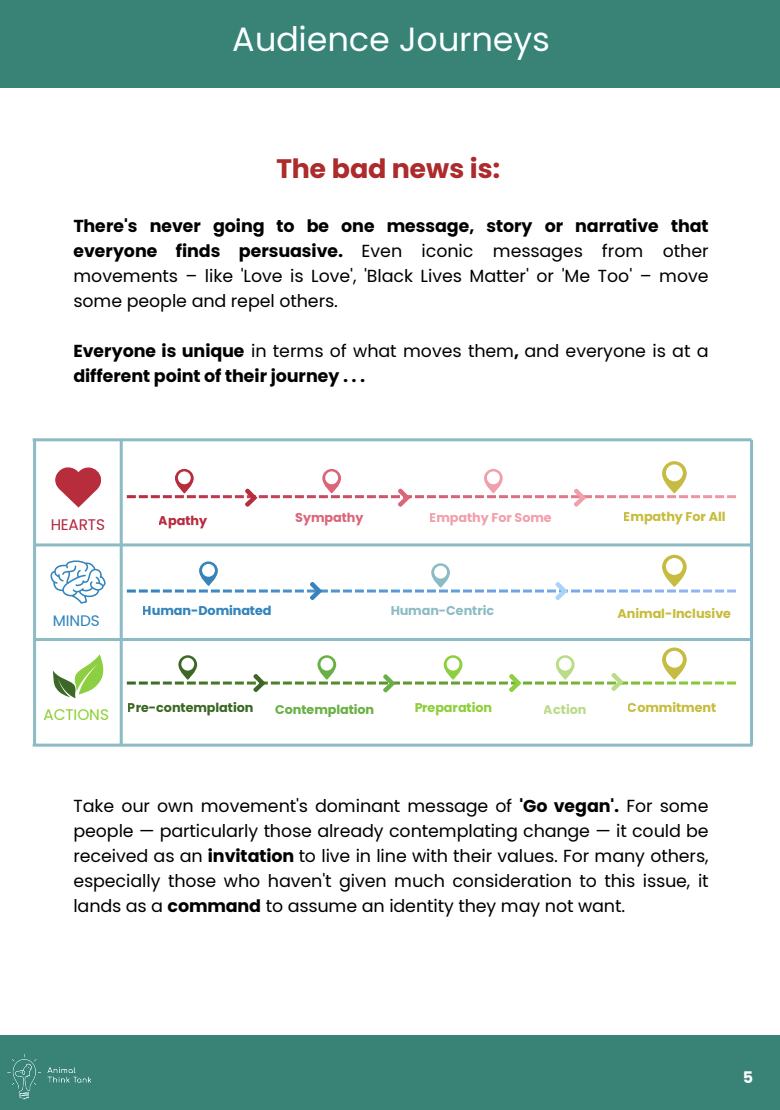
There’s never going to be one message, story or narrative that everyone finds persuasive. People are at different points in their journey towards animal freedom – and the most effective communication meets them where they are, and nudges them forward.
Use this guide to:
1. Meet people where they are. Find out where your audience is in their hearts, mind and actions journey, and what a next step could look like.
2. Make messages resonate. Match your communications to people’s values, identities and stages of awareness to increase impact and reduce resistance.
3. Grow broad public support. Excite your core supporters, reach conflicted audiences, and avoid language that reinforces opposition narratives.
Five top tips
If we’re talking to everyone, we’re talking to no one.
- Everyone is at a different point in their journey. Meet people where they’re at, and move them along by tailoring messages in a way that connects with their values and identities, and encourages change.
- There is a spectrum of allies. Your communications needs to excite and mobilise your ‘base’ so they spread the message and take action; it should also resonate with those who are conflicted yet ‘persuadable’, to encourage them to support this cause.
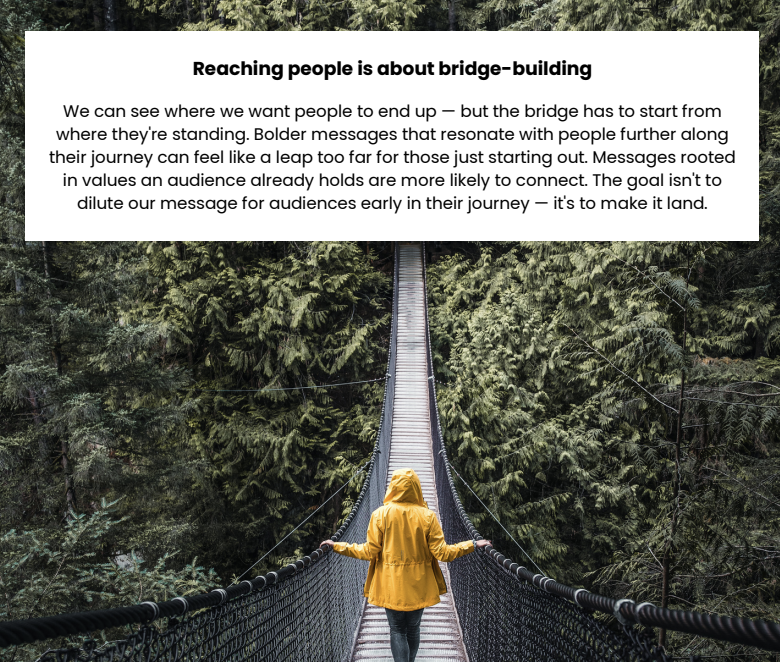
- Work with what people already believe. Messages that fit with what people already believe are more likely to be accepted. From there, helpful narratives can shift their thinking.
- People need to feel like they’ve reached their own conclusions. People want to make their own choices and form their own opinions. If your message makes them feel like they’re being told what to think, they may reject it. Open-ended questions and messages are more engaging and thought-provoking.
- Show that others care too. People want to belong. Stories and testimonials from diverse and trusted messengers can show widespread support and involvement.
Why it matters
A message that resonates deeply with one group can fall flat – or actively backfire – with another.
Take our own movement’s dominant message of ‘Go vegan’. For some people – particularly those already thinking about change – it could be received as an invitation to live in line with their values. For many others, it lands as a command to take on an identity they may not want.
If we look back at what moved us to go vegan and become active, it likely wasn’t one thing, but a series of nudges. Maybe a conversation, a documentary, an image, a message that caught us at the right moment, each one building on the last … until something shifted. That’s how change works. And it means repetition matters: people often need to encounter a frame or narrative multiple times before it lands.
Download the guide.
How you could use this guide
Campaign planning
To ask key questions before you start: who the message is for, what they already believe, where they are in their journey, who they can trust.
Tailoring your communications
To make intentional choices about language, framing, imagery, messengers, stories and channels for the audience you want to reach.
Broad-reach campaigns
For wide reaching media like billboards, TV or radio ads and national press, when you can’t target one group: lead with widely shared values like care, compassion, fairness and family. And aim to nudge, not convert.
Researching your audiences
To choose how to hear from people directly – through segmentation, surveys and polls, message testing, or interviews and focus groups.
From our Substack: What we learnt from public opinion research with people who have animal companions vs people who don’t.
“Are you a chicken?” “Don’t be a sheep.” “What a greedy pig.”
Most people aren’t firmly for or against animal freedom — they’re somewhere in the middle. At Animal Think Tank, we call them the ‘persuadables’:people who are unsure, conflicted, or haven’t thought deeply about the issue, but might be open to change…
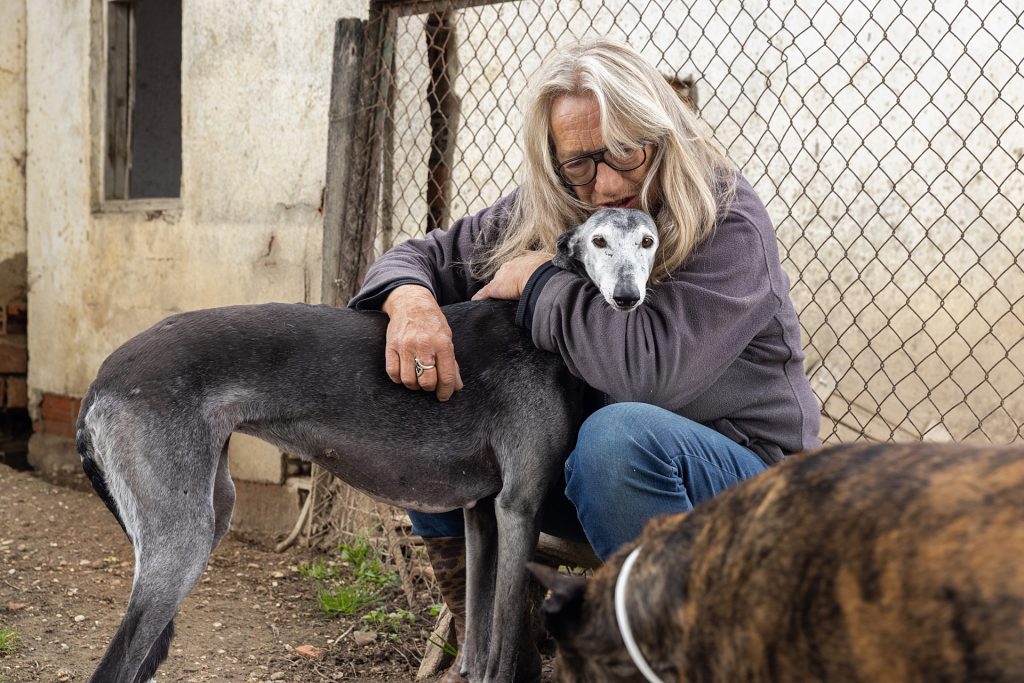
We wanted to know: Do people who live with animals think differently about animal freedom than those who don’t? And what can that tell us about how to communicate more effectively?
Find more resources
Feeling stuck on how to use these ideas in your comms? Drop us a line, we’d love to support.