Framing messages for
animal freedom
A practical guide for animal freedom communicators

What this is
The words and images we choose shape how people see an issue – often before they’ve even thought about it – and whether they take action.
Helpful frames can expand people’s thinking and build empathy. Unhelpful frames can reinforce the very ideas we’re trying to challenge. This guide shows how to frame communications more persuasively, and how to test every message before it goes out.
Use this guide to:
1. Know the landscape – what your audience already believes, which frames to avoid and reinforce, and the core frames you want to leave them with.
2. Build your narrative framework – frame the issue through shared values, show the problem as going against those values and frame solutions as achievable.
3. Frame through helpful images as well as words that subtly expand people’s thinking in a way that doesn’t cause push back.
Key takeaways
Framing is the foundation of communications.
- Lead with values. Frame the issue through values your audience already holds, and show how the problem goes against those values before introducing evidence or facts.
- Balance harm with hope. Where possible, show both the problem and the better future that animal freedom represents, so people feel urgency without despair.
- Don’t reinforce harmful frames. Reinforce on our own terms. Don’t repeat industry terms or argue against their language. If their frame needs addressing, use a ‘truth sandwich’ – open and close with your frame, and address theirs briefly in the middle.
- Invite people in. Ask people to live up to their values, rather than just asking them to act. Show that people like them are already taking action because they care.

Why it matters
We’re in a framing battle – whether we realise it or not.
Animal exploitation industries invest heavily in their framing for a reason. ‘Happy eggs’, ‘high welfare’, ‘all natural’, ‘free-range’, ‘sustainable’ … these aren’t accidental word choices; they’re designed to make the system feel harmless, necessary, even positive.
When we communicate without thinking strategically about framing, can end up reinforcing these frames without realising it. That shifts the question from ‘how do I make a stronger argument’ to ‘how do I create the frame in which this issue is best understood?’.
Other social justice movements have shown what’s possible. Marriage equality gained momentum when it shifted from talking about gay people having rights, to talking about how everyone should have the freedom to marry the person they love. The facts didn’t change – the frame did.
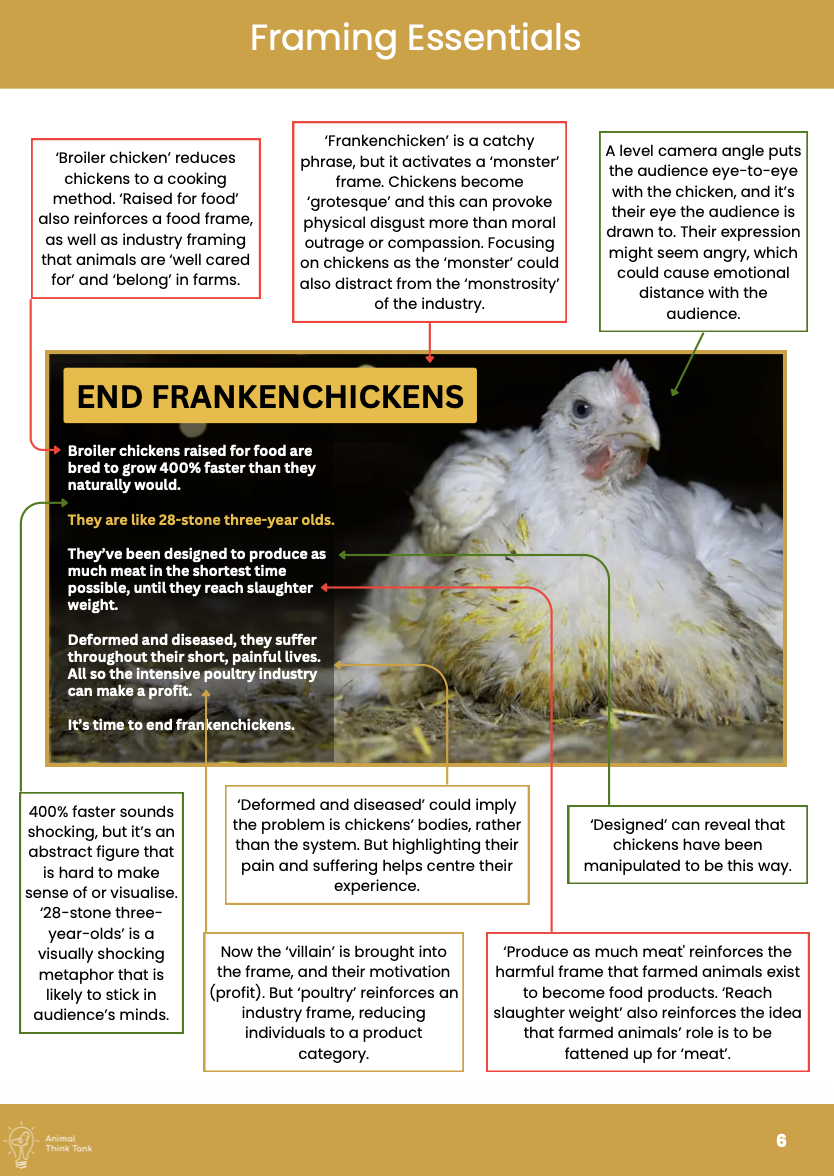
How you could use this guide
Campaign planning
To map the narrative frame landscape – which frames to avoid and to reinforce, and the core frame you want your audience to leave with.
Writing and reviewing
To check words, images and phrases against the FRAMES checklist.
Framing for different audiences
To frame the same issue in ways that resonate with where each audience is now, and encourage their next step.
Responding to industry claims
To challenge harmful frames without repeating them, using a ‘truth sandwich’ or a journey story.
From our Substack: How do we tackle the ‘meat is necessary’ narrative?
Necessity is a deeply held narrative, powerfully leveraged by the industry.
For example, the Agricultural and Horticultural Development Board’s ‘Let’s Eat Balanced’ campaign frames ‘meat’ and ‘dairy’ as essential to a healthy balanced diet. Historically, there may have been a time when consuming animals was necessary for survival, but today, this narrative no longer reflects reality.
In our research, we’ve been testing how framing messages about animal freedom differently affects people’s attitudes.
Find more resources
Feeling stuck on how to use these ideas in your comms? Drop us a line, we’d love to support.